
Posts tagged delphine dora
delphine dora | l'inéluctable pulsation du temps @ the quietus (uk)

Delphine Dora

L’ineluctable pulsation du temps

Marionette

Inspired by a German 'sociologist of speed', the French composer and improviser presents a suite of highly resonant compositions

Miloš Hroch
Published 6:00am 16 March 2026

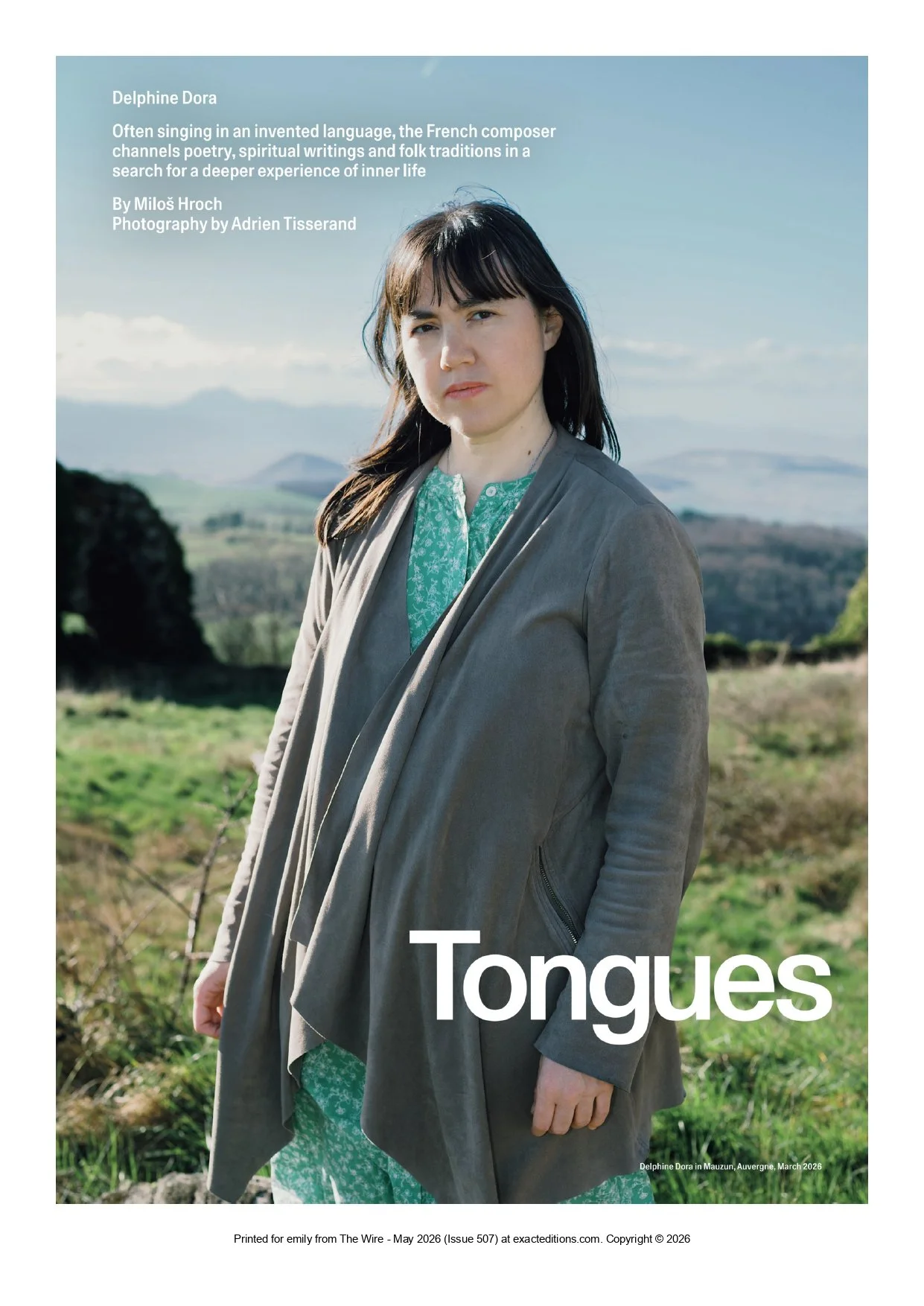
On her latest album, Delphine Dora is concerned with temporality, its pace and pressures it produces. L’ineluctable pulsation du temps finds the French pianist, composer and improviser summoning a gentle collection of piano cycles with drone undertows. The record took shape during a time of intense touring, while Dora was simultaneously busy engaging with writings on acceleration and alienation by Hartmut Rosa, a “sociologist of speed”. According to Rosa, capitalist societies are programmed for constant economic growth, which forces us into a rat race, approaching the world instrumentally and as a competition. It may sound too esoteric for a German sociologist, but Rosa proposes a different mode of encountering the world, based on active and attentive presence, which he calls ‘resonance’. In other words, it’s about unlocking ourselves to affection. This must have touched Dora, a Parisian who more than a decade ago relocated to a village in rural France. She has used Rosa’s vocabulary as inspiration for track titles like ‘Désynchronisation’ on L’ineluctable pulsation du temps.

Different temporalities are woven into the album’s composition: brisk, fleeting cycles of piano arpeggios, as if chasing the foam of days, are, at least from the second third of the album, layered with sustained droning synths, symbolising the persistence of time. Dora’s piano style has often been characterised by melodic and instrumental asceticism, but on L’ineluctable pulsation du temps piano melodies are generous and colourful. She has been releasing music since the mid-2000s via labels such as Okraïna, Three:four, Modern Love or her own Wild Science imprint. Delivering into her catalogue is like opening a spiritist’s cabinet, and the reward is a sense of wonder, full of dreamy folk lullabies with murmuring vocals, avant-garde treasures or old pipe organ improvisations recorded in churches around Europe, which over time grew more complex.

L’ineluctable pulsation du temps was composed in 2018, around the time Dora was working on her collaborative 2020 album L’inattingible, which was praised by Julia Holter and presented Dora’s most ambitious work in terms of instrumentation and personnel. Her voice is entirely absent on the new album, but the opening ‘Ubiquité’ features Aby Vulliamy’s sublime tones on musical saw, which distantly echoes Dora’s previous lullabies. It’s the only addition to the album. Otherwise it’s just Dora, her piano and Nord Electro keyboard.

It is not the first time Dora has been concerned with temporality through drone-oriented compositions, as on her previous, 2020 album In Illo Tempore. Her approach to piano on the latest record can also recall albums like 2012’s A Stream of Consciousness. L’ineluctable pulsation du temps is best when these approaches meet halfway, as in pieces like ‘L’accélération ineluctable’ or ‘Les jours liquides’. This is when Dora evokes ethereal minimalism by Irena and Vojtěch Havlovi, who employed medieval tonality and “shadowy vocals”. However, the serene experience can in other pieces slip into an alienating sense of background listening. Even though L’ineluctable pulsation du temps doesn’t carry the unsettling qualities of her previous solo or collaborative releases, it still gives plenty of moments to resonate with.
delphine dora & jérôme bouve @ boomkat (uk)

Performed on organ and harmonium in various churches around Normandy and then shaped by sound artist Jérôme Bouve, ʻvents dʼaetherʼ is a blustery and sublimely beautiful melange of widescreen environmental recordings and unsettling kaleidoscopic drones that fully stops time. RIYL Florian Fricke, Virginia Astley, FUJI||||||||||TA or Kara-Lis Coverdale.

You should already know that if Dora's involved, things are gonna go off. Because the way she approaches her instrument, whatever that instrument might be, is always so distinct, informed by the way she improvises, channeling elements that aren't obvious. On 'vents d'aether', it's her surroundings as well as the various organs that invisibly shepherd her through the process, seeping into the compositions and mapping out the space for attentive listeners. And that's never more obvious than on the side-long title track, introducing us to the album without pulling any punches. A peal of church bells is joined by Dora's spontaneous, poetic reflections. Dora isn't hampered by some misguided sense of academic rigor; often labeled an outsider, she lets her own rhythm and her own sense of pitch steer the improvisations, not a meticulously overworked concept. And when her voice echoes wordlessly above the wheezing chords, blurred into recordings of winds beating down on wooden shutters, it's as if it's able to pick out the shape of the room itself, inhabiting a space between folk, sound art and sacred music without even trying.

Of course, the other piece of the puzzle here is Bouve, who'd been mulling over the idea of recording in and around the Cotentin Peninsula for years before he met Dora. He was fascinated not just by the organs and harmoniums that were contained in the various chapels and churches of Val de Saire, but the picturesque, rugged coastal landscape and the incidental sounds (seagulls, rushing waters, the omnipresent sea breeze) that often leak into the recordings. So the pair set off in late 2024 and stopped at every venue that would give them access, dubbing hours of improvisations that Bouve would later collage into the album. You can hear their journey unfold like a film; the field recordings aren't used for texture or to grandstand, they help us to perceive what it might feel like to walk from building to building on the coast and how the music might be eroded by sea spray just like the masonry itself. Dora's pitchy drones capture the persistence of the maritime weather, its near-constant noise and enveloping atmosphere and Bouve provides the frame, recording and mixing his elements to situate us in places that may or may not be real, times that bleed into one another. 

The result is disorientating but mad charming, a ride out through unfamiliar territory that's spotted by dramatic, outstanding cues that are among Dora's most memorable to date. If you need a quick taste, check the four-minute 'Le Vast XIII', where Dora's warbling tones (modified on the fly by Bouve who works the organ's drawbars) are offset by eerie, waterlogged knocks - it's like being marooned and serenaded all at once. 

reviewSeb Brundelphine dora
delphine dora @ revue & corrigé

« Nouvel opus de Delphine Dora construit autour d’un poème de Novalis « Cantique Spirituel », comme un point de basculement qui emporte sa musique dans un romantisme sombre ; les notes égrenées sur le piano se perdant dans un dédale rêveur, jouant entre lumières et ombres. Delphine Dora s’est entourée d’Andrew Chalk (orgue, guitare, basse) et Jean-Noël Rebilly (clarinette) pour accompagner son spleen musical, lui offrir des habits soignés. On songe à l’école anglaise apparue à la fin des seventies, aux albums parus sur Obscur Records, ceux de : Gavin Bryars, Harold Budd, Jan Steele, Brian Eno, pour évoquer la musique que referme cet album, Erik Satie aussi mais qui se laisserait aller à l’improvisation. La présence d’Andrew Chalk à la production n’y est pas étrangère, notamment sa complicité passée avec David Jackman qui fit parti du Scratch Orchestra. Brian Eno essayait à la suite de John Cage, de redéfinir les contours du musical, de proposer un espace/temps à habiter – ce que la critique définira comme musique ambiante – le substituant à cet objet défini temporellement issu de la composition, comme un objet sonore fini sur lui-même, séparé. Pour autant Delphine Dora contrairement à ses ainés ne propose pas une musique fonctionnelle, n’est pas dans une distance intellectuelle, objective, mais se laisse conduire par l’émotion, l’écoute, le son dans sa beauté imaginative. On rentre dans sa musique comme dans une chambre close, se laissant conduire par sa main, les notes nous prennent en elles. Novalis disait que : « Plus une chose est poétique, plus elle est réelle », la musique est sans doute la forme que prend l’Art qui touche le plus au poétique. La musique de « As Above, so Below » est un poème sans mot, qui émerveille, une fenêtre sur un monde rêvé qui s’éloigne de nous, de jour en jour, pris dans la tourmente du temps. »

reviewSeb Brundelphine dora