Bobo & Behaja
Aia Haja?
Carton Records / Boomslang Records
8/10
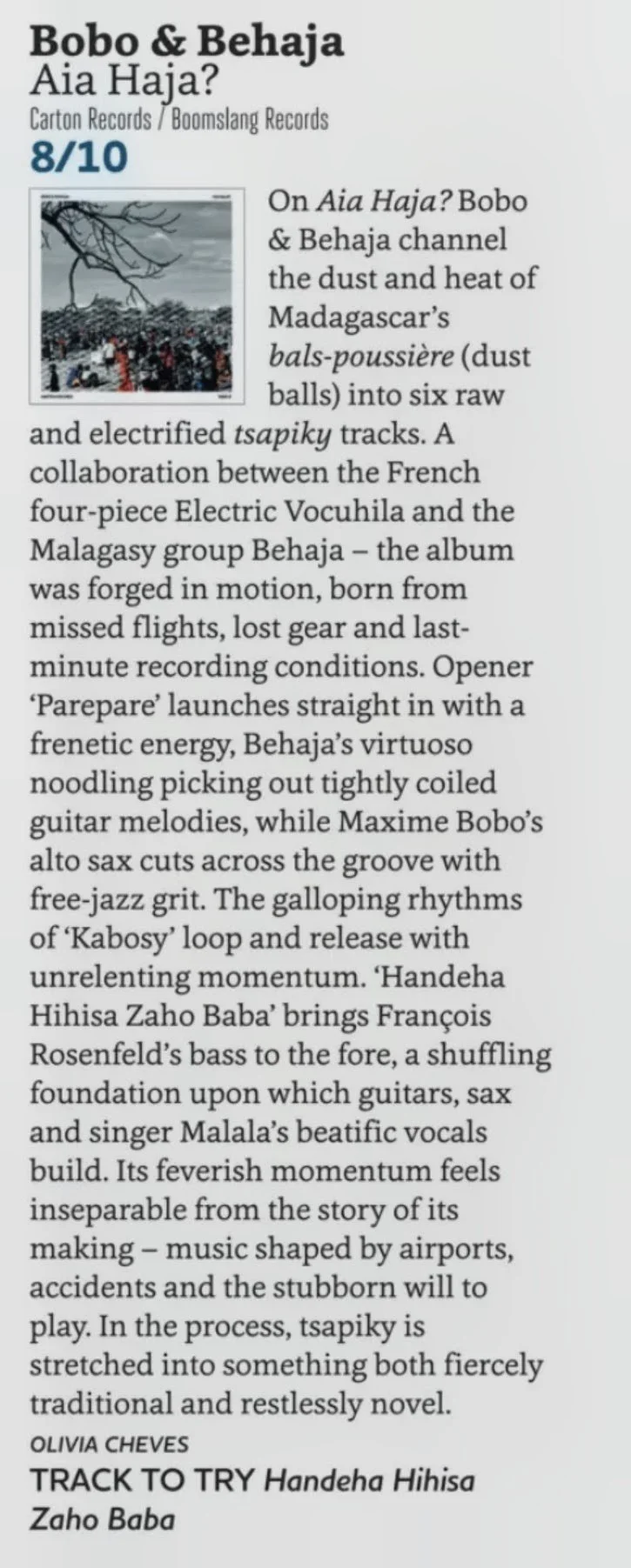
On Aia Haja? Bobo & Behaja channel the dust and heat of Madagascar’s bals-poussière (dust balls) into six rax and electrified tsapiky tracks. A collaboration between the French four-piece Electric Vocuhila and the Malagasy group Behaja — the album was forged in motion, born from missed flights, lost gear and last-minute recording conditions. Opener ‘parepare’ launches straight in with a frenetic energy, Behaja’s virtuoso noodling picking out tightly coiled guitar melodies, while Maxime Bobo’s alto sax cuts across the groove with free-jazz grit. The galloping rhythms of ‘Kabosy’ loop and release with unrelenting momentum. ‘Handeha Hihisa Zaho Baba’ brings François Rosenfeld’s bass to the fore, a shuffling foundation upon which guitars, sax and singer Malala’s Beatific vocals build. Its feverish momentum feels inseperable from the story of its making — music shaped by airports, accidents and the stubborn will to play. In the process, tsapiky is stretched into something both fiercely traditional and restlessly novel.
OLIVIA CHEVES
Celostnost glasbenih potez, ki brbotajo od nalezljivosti
Carton Records, 2026
Pestra ritmika in navidezno nenadzorovani melodični prijemi, ki v sebi nosijo dobršno mero spretnosti izvedbe, so nepogrešljive sestavine glasbe, ki na poslušalsko uho v nemalo primerih delujejo z unikatnim izkupičkom ob boku. »Oh, ta glasba me pa kar spravi v nek trans!« bi brez težav slišali tudi v kontekstu albuma kvinteta Bobo & Behaja z naslovom Aia Haja?, ki ga obravnavamo v tokratni Tolpi bumov. Toda pri obravnavi glasbe francosko-malgaške zasedbe je smotrneje uporabiti kakšne bolj podkrepljene pristope. Subjektivno dojemanje je resnična stvar, in širši množici, ki ni nujno ciljna, morda raje le številčnejša, omenjeni obljubljeni trans pridoda dovolj – dovolj, da se bo nekdo kljub nepoznavanju konteksta glasbe ali pa osnovnih vprašanj, ki jih ta odpira, vendarle odločil za nakup vstopnice za obisk koncerta.
Glasba zasedbe Bobo & Behaja se napaja v tradiciji glasbene zvrsti tsapiky, izrazito plesnega žanra z jugozahodnega dela Madagaskarja, ki se nanaša na zvočnost obredov bal-poussière, v osnovi tradicionalno družbenih in obrednih dogodkov. Gre za večdnevna praznovanja na prostem, ki pogosto potekajo ob pomembnih življenjskih prelomnicah, kot so poroke in pogrebi, pa tudi razni lokalni festivali. Že zaradi korenin glasbe zasedbe bi na prvo žogo zlahka zapadli v diskurz konstrukcije avtentičnosti, fascinacije z Drugim ali pojava omenjenega transa in pretakanja takšnih in drugačnih notranjih občutij. Seveda ne smemo zanemariti individualne izkušnje poslušalke – ki si jo v kontekstu Boba & Behaje nedvomno deli kar dobršna mera slušateljev – toda njihova glasba v maniri, ki je stabilna, v prvi vrsti vredna obravnave in podkrepljena z ničkoliko vidiki, še vedno uspeva oziroma živi.
Francoski saksofonist Bobo Maxime, sicer član zasedbe Electric Vocuhila, ki jo večkrat zasledimo pod nalepko tropikalni jazz, je v preteklosti velikokrat obiskal Madagaskar, kjer se je spoznal z žanrom tsapiky. Skozi raziskovanje se je povezal z lokalno zasedbo Behaja, poimenovano po njenem kitaristu, in danes lahko z albumom Aia Haja? opazujemo, na kakšne načine je saksofonist Maxime skušal zaorati ledino na področju srečevanja tsapikyja s tradicijo rocka in jazza. To mu zelo dobro uspeva prav zaradi prisotnosti njegovega inštrumenta, ki na albumu neredko prevzame vlogo gonilca zvočnega toka. Kljub temu glasba izžareva kolektivnost, kakršnekoli težnje po performativni glasbeni praksi, ki bi jo narekoval izključno Maxime in imel zasedbo Bahaja samo malo za zraven, pa niso navzoče. S sodelovanjem v ustreznem pomenu te besede se tudi s poslušanjem zazna hommage zgodovinskemu kontekstu žanra tsapiky, kar je najverjetneje v prvi vrsti tudi smoter tega projekta.
V posameznih skladbah ne zasledimo kompleksnih modulacij v druge tonalitetne nastavke. Slušna izkušnja vztraja v določeni natempirani in vedri špuri, toda to še zdaleč ne pomeni, da glasba zasedbe Bobo & Behaja ni kakovostno izvedena in zasnovana – ravno nasprotno: neposrednost utrdi njihov izraz, ki, ko ga podrobneje analiziramo, deluje sila natančno. Izstopajo bogati ritmični segmenti, ki bi jih s poglobitvijo vanje lahko razstavili na manjše odseke. Kitarist Behaja note ubira kot za stavo, se pri tem navidezno spontano in brez napora ujame s preostalimi člani zasedbe in njihovimi inštrumenti ter gradi skoraj neprekinjen zvočni tok kompozicij, ki se spajajo v celoto.
Gibanje je nekaj, kar nam brž pride na misel in se nenazadnje neposredno manifestira tudi v naše dejansko fizično stanje, kar se bo, si upamo trditi, izrazilo tudi na koncertu, ki ga bo zasedba izvedla na letošnji, 42. ediciji festivala Druga godba 29. maja v Katedrali Kina Šiška. Gibanje zaznamuje potek glasbenih pasaž, s katerimi koketira vokalistka Ekaly. Z inštrumentalno sekcijo vzpostavi izrazito prožen dialog, podaja odgovore na zaigrane fraze in utrjuje že predstavljene glasbene motive, najbolj nazorno v skladbi Kabosy, katere izmenjevalni odsek glasu in kitare bi pravzaprav lahko trajal v nedogled. Tudi ko Ekaly ne slišimo, denimo v skladbi Rodobey, odmev njenega glasu na nek način ostaja prisoten.
Na prvi posluh Bobo & Behaja vseskozi ostajajo v istih kolesnicah, toda te kolesnice so tako dobro uvožene, da se med poslušanjem začnemo preizpraševati o zmožnosti glasbe, da popolnoma zaobjame svojo zasnovo in v njej tudi celostno deluje. Analiza posameznih skladb z albuma tako niti ne bi bila prikladna. Smiselneje se je osredotočiti na celostnost glasbenih potez, ki brbotajo od nalezljivosti in album Aia Haja? opolnomočijo z neomajno atmosferično napetostjo.
La playlist soundsystem de Djubaka
Samedi 21 mars 2026
BPM – Bonnes Pulsations du Monde
Slovénie : le renouveau des musiques folk entre Europe centrale et Balkans
Publié le : 27/02/2026 - 16:10
Cette semaine, BPM vous emmène à Ljubljana, au cœur du MENT Festival, là où les traditions se réinventent et où les scènes indépendantes dialoguent au-delà des frontières. Avec aussi : une énergie hybride venue d’Afrique du Sud, de l'électro solidaire de l’Ukraine, le tsapiky incandescent du Sud-Ouest malgache et, dans « l’Histoire d’un live », une légende brésilienne, Antonio Carlos Jobim, qui fait tomber une pluie tropicale sur Montréal.
5/ BOBO & BEHAJA - "Kabosy", extrait de Aia Haja? (Maison Tempête - 2026)
Musiques d’Afrique : février 2026 en cinq albums
Journaliste print & web
2 mars 2026
Un mois placé sous le signe de Madagascar, avec deux sorties de « tsapiky ». Mais aussi des incursions du côté du Sénégal, de l’Algérie et du Maroc.
« Aia Haja ? », de Bobo & Behaja
Retour à Madagascar, toujours sur un air de tsapiky, avec un album qui a bien failli ne pas voir le jour.
Le groupe Bobo & Behaja a en effet dû entrer en studio sans l’équipement nécessaire : haut-parleurs à pavillon, amplificateurs de karaoké et pédales d'effets artisanales s’étaient égarés lors d’une correspondance aéroportuaire à Zurich. Le précieux matériel est finalement arrivé à Paris avec une semaine de retard, contraignant les musiciens à enregistrer les sept morceaux en seulement deux jours.
Le quintette s’articule autour de ses deux leaders éponymes : le Fançais Maxime Bobo, saxophoniste au sein des groupes Electric Vocuhila et Mitsaitsaiky, et le Malgache Behaja, prodige de la guitare électrique originaire de Sakaraha, dans le sud-ouest de l’île. Avec leur disque Aia Haja ?, ils contribuent à renouveler un genre en perpétuelle mutation, certes, mais jusqu’alors peu coutumier des cuivres. De cette alliance singulière entre cordes et pistons naît une énergie inédite, flirtant avec le rock et le free jazz.
7 titres, 49 mn / Maison Tempête / 20 février
New & Notable
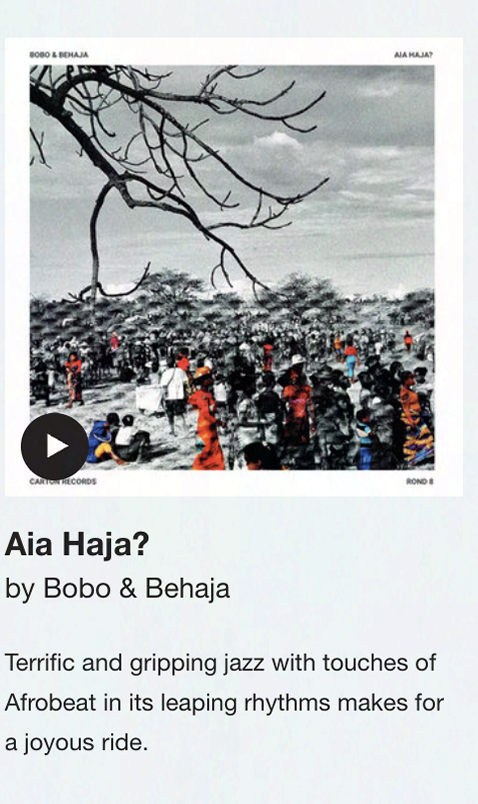
Aia Haja?
by Bobo & Behaja
Terrific and gripping jazz with touches of Afrobeat in its leaping rhythms makes for a joyous ride.
Un quintet franco-malgache, au carrefour des couleurs orientales et occidentales, c’est Bobo et Behaja. Un voyage où les surprises s’invitent sans se faire attendre… Des sonorités délirantes, aux rythmes trépidants, la musique nous emporte dans un tourbillon mélodieux, un mouvement indomptable.
5 songs you need to hear this week
[…]
Bobo & Behaja: “parepare”
“parepare” goes all over the place and I’ve followed each thread to its end. This is the lead track on Bobo & Behaja’s new tape Aia Haja?, invented someplace between Budapest and Zurich and recorded using horn loudspeakers, karaoke amplifiers, and homemade pedals that “reproduce the sonorities of the bal-poussière ceremonies of southwest Madagascar.” Bobo & Behaja blend free jazz, garage rock, and tsapiky together, corking feral guitar lines with saxophone honks that strobe then spiral. On the topline, Ekaly’s vocal unspools like an instrument governed by its own chaos, while François Rosenfeld and Gérard Rakotoniaina’s half-staccato, half-anarchic rhythm section brightens the tune from below. These are Malagasy virtuosos bouncing off each other’s impulses. I’ve never heard anything like it. —Matt Mitchell
Albums Of The Week: Bobo & Behaja | Aia Haja?
By
-
2026-02-19
THE EDITED PRESS RELEASE: “Isolated from the rest of the group at the front of the plane taking us from Budapest to Zurich, Behaja left without waiting for us, confidently following a group of travellers who had gone to catch their connecting flight,” recalls one of the Franco-Malagasy guitarist’s bandmates — a list that includes vocalist Ekaly, also saxophonist Maxime Bobo, bassist François Rosenfeld and drummer Gérard Rakotoniaina. “Lost in switzerland’s largest airport, he had no phone and he speaks neither French, English nor German.
“After an hour and a half of searching and several public announcements to the thousands of travellers, the airport police, initially uncooperative, finally found him at the end of a corridor. Finally reunited, we managed to catch the transfer to Paris at the last minute, but some of the suitcases — checked in hastily — were loaded into the hold of a different plane.
“A few days later, we set off to record our first album, deprived of much of our equipment — horn loudspeakers, karaoke amplifiers and homemade effects pedals that reproduce the sonorities of the ‘bal-poussière’ ceremonies of south-western Madagascar — which the airline sent us after a week’s wait. So it was only during the last two days in the studio that the conditions were right for recording the tracks for this album.
“The repertoire, largely created in Madagascar and then performed on stage during a European tour of some 30 concerts, is based on the new rhythms, structures, instrumental and vocal techniques of contemporary tsapiky, of which Behaja is one of the most emblematic musicians.”
#SessionLive La Cafetera Roja (Italie/Fr) + playlist Sophian Fanen
Publié le : 21/02/2026 - 07:00
Du rock politique groenlandais des années 70 aux cafetières rouges fatto in italia, tout est en libre service !
Tous les mois, le critique musical Sophian Fanen, du site Les Jours, sélectionne 5 titres. Pour février, les élus sont :
- Nilza Costa, Oxum, tiré de l'album Cantigas (Brutture Moderne, 2026)
- Momoko Gill, No Others, tiré de l'album Momoko (Strut Records, 2026)
- Danyl, Ya Habiba, tiré de l'album Zmig (Structure, 2026)
- Bobo & Behaja, Parepare, tiré de l'album Aia Haja? (Carton Records, 2026)
- Sumé, Piffiit Nutaat, tiré de l'album Sumut (ULO, 1973).
Next Week in Music | February 16-22 • The Short List: 21 Titles You Want to Hear (Part 1)
By Darryl Sterdan - 2026-02-15
It has been one of those days when nothing works right. Not my fingers; not my brain; not my laptop; not the Internet. So screw it; I give up. But somehow, despite all the roadblocks and setbacks and dumbassery, I have still managed to put together this list of worthwhile music. Here are your plays of the week:
Bobo & Behaja
Aia Haja?
THE EDITED PRESS RELEASE: “Isolated from the rest of the group at the front of the plane taking us from Budapest to Zurich, Behaja left without waiting for us, confidently following a group of travellers who had gone to catch their connecting flight. Lost in Switzerland’s largest airport, he had no phone and he speaks neither French, English nor German. After an hour and a half of searching and several public announcements to the thousands of travellers, the airport police, initially uncooperative, finally found him at the end of a corridor. Finally reunited, We managed to catch the transfer to paris at the last minute, but some of the suitcases — checked in hastily — were loaded into the hold of a different plane. A few days later, we set off to record our first album, deprived of much of our equipment — horn loudspeakers, karaoke amplifiers and homemade effects pedals that reproduce the sonorities of the “bal-poussière” ceremonies of south-western madagascar — which the airline sent us after a week’s wait. So it was only during the last two days in the studio that the conditions were right for recording the tracks for this album. The repertoire, largely created in Madagascar and then performed on stage during a European tour of some 30 concerts, is based on the new rhythms, structures, instrumental and vocal techniques of contemporary tsapiky, of which behaja is one of the most emblematic musicians.”
Depuis le 19 septembre 2006, la Centrifugeuse est une émission musicale diffusée 1 mardi sur 2 de 20h à 21h30. Retrouvez là sur les ondes de la radio Canal Sud 92.2 FM (Toulouse et ses environs) ou sur le site internet de Canal Sud. L’émission propose un grand mélange en défendant toutes les musiques indépendantes, de la musique contemporaine au noise rock, en passant par la folk, la pop, le jazz, la soul… Avec son envie de décloisonner les genres musicaux et montrer les liens qui existent entre eux. Il y a assez de cloisons sociales, pourquoi créer des frontières musicales ?
Nicolas Genest, Raphaël Pannier, Dhafer Youssef, Clément Janinet & More
By Ludovico Granvassu | Mondo Jazz
December 23, 2025
Radio Free Brooklyn's "Mondo Jazz" (Host: Ludovico Granvassu)
December, 17, 2022 10:00 PM–12:00 AM
Bobo & Behaja | Rafoza Manday Tandra | Aia Haja? | 2026 | Carton
chronicles of womex 2025
As has long been the case, the Mundofonías team attended the annual meeting of WOMEX, one of the largest events related to root musics on the planet that is held each year in a different city. In 2025 it took place in Tampere, Finland, and from there we bring impressions of some memorable concerts which we recall and which make us travel through Mali, Tanzania, Madagascar, Serbia, Taiwan and Mauritania among other destinations. We also share the conversations we had with Maxime Bobo, co-promoter of the Franco-Malagasy project Bobo & Behaja, and with the Taiwanese musicians of 3Peoplemusic. We listen to the winner of the Artist Award, the Mauritanian Noura Mint Seymali, and we also comment on the refusal of the Professional Excellence Award by the creators of the Syrian Cassettes Archives, listening to some of the music recovered and compiled in this initiative.
– Kankou Kouyate – Nganou balla – N’Darila
– The Zawose – Kusekala kwanyungu (live) – [sin álbum especificado]
– Bobo & Behaja – Karioke menamaso – Aia haja?
– Gordan – Šara – Gordan
– 3Peoplemusic – LaSoRe – Him, her, it, and three
– Noura Mint Seymali – Tassirit – Yenbett
– Syrian Cassette Archives – Side B [frag.] – SCA mixtape vol.1
Voces invitadas:
Guest voices:
– Maxime Bobo (Bobo & Behaja)
– 3Peoplemusic
🎶🇲🇬 Bobo & Behaja est un groupe franco-malgache né de la rencontre entre le saxophoniste Maxime Bobo et le guitariste Behaja, figure du tsapiky de Madagascar. Leur musique fusionne les rythmes festifs et hypnotiques des «bals-poussière» malgaches avec le souffle du jazz et des sonorités rock contemporaines. Ensemble, ils créent une expérience à la fois enracinée dans la tradition et résolument moderne, portée par une énergie de transe et d’improvisation.