société étrange | heat @ musicmap (it)

SOCIETÉ ETRANGE  "Heat"
   (2026 )

Nella proposta di viaggio sonoro dei Société Étrange, il basso è il fulcro centrale dell'andamento. I suoi giri ripetitivi, abbinati alla batteria e ai suoni elettronici, danno l'idea di un trip affascinante e meditativo.

Uscito per l'etichetta Carton, “Heat” ci propone sette di queste gite nel suono. Il basso di Romain Hervault è pulsante ma a tratti anche sferragliante, senza arrivare al punk, ma contenendo una controllata dose di “sporco”. I suoni eterei ed avvolgenti di Antoine Bellini fanno da contraltare ai beat freddi e secchi della batteria elettronica.

Ogni traccia ha una durata diversa, a seconda di come si sviluppa l'estro sul materiale di partenza. Ad esempio, “Coquet” dura due minuti e mezzo, mentre “Place Saint Bruno” arriva quasi a nove. Quest'ultima si sviluppa su un giro in 7/4, in cui le note scelte dal basso fanno percepire l'armonia. La melodia ascendente fa intuire un'armonia in diminuito, ma Bellini non esegue quasi mai degli accordi completi, bensì dei singoli suoni.

C'è la ricerca dell'indefinito, per concentrarsi sull'ipnosi che scaturisce dalle ripetizioni, e sull'accumularsi di suoni. Non ci sono quindi strofe o ritornelli, ma un'unica struttura stabile. Nella titletrack, un grave suono sintetico è molto riverberato, creando un'atmosfera quasi umida.

“Fenêtre sur cour” è costellata di suoni dondolanti, mentre la parte percussiva è dominata da un ticchettio, e intanto il bassista viaggia sugli arpeggi. È uno dei brani più misteriosi ed intriganti dell'album, che procede mediamente tranquillo, senza patemi d'animo.

Una leggera inquietudine arriva invece con “Chamber dress”, dove il basso assume un timbro nasale, e il suono synth si fa acido e, insistendo su una tonalità minore, dà un colore scuro al brano. L'elemento rumoristico prende il sopravvento in “Soleil lourd”, che dà la sensazione di un sottobosco fitto e brulicante, quasi come un humus musicale.

Infine “Fifth” procede andante ancora tra suoni nasali e da trance. “Heat” è musica senza domande né risposte, una secchiata di suoni tenui ma costanti, per creare un clima di sospensione, di attesa. (Gilberto Ongaro)

antoine ferris | [kaaarst] @ african paper (de)

Antoine Ferris: Albumdebüt auf Carton Records

Veröffentlicht am 11. Mai 2026 von admin

Antoine Ferris legt dieser Tage sein Debütalbum beim Carton Records vor, der ungewöhnliche Titel der CD ist “[KAAARST]“. Die Musik bewegt sich im Spannungsfeld von experimenteller Klangarbeit, Noise, Improvisation sowie Einflüssen aus Pop, Hip-Hop und diverser elektronischer Musik. Im Zentrum steht der E-Bass, der hier nicht nur als Instrument, sondern in den Worten des Labels auch als Klangquelle und Signalgeber fungiert: Durch

Feedback, perkussive Spielweisen und den Einsatz von Effektgeräten entstehen vielschichtige, teils rohe und industrielle Klangbilder. Ergänzt wird dies, wie es ferner heißt, durch Sampling und eine bewusst eingesetzte Offenheit gegenüber dem Zufall und klanglicher Unschärfe. Neben Solostücken enthält das Album auch Kollaborationen, darunter Beiträge mit Natacha Kanga und Louie Z. Das Album ist auch zum Download erhältlich.

antoine ferris | [kaaarst] @ hörbar der nmz (de)

Natürlich gibt es immer noch musikalischen Stoff, der überrascht. Schroff und schrill knallt Antoine Ferris mit – whatever it means – [KAAARST]. Obwohl, ja, die Musik klingt wie der Album-Titel. Es «cruncht» da in alle Richtungen, die Musik zersplittert jeweils unvorhersehbar und kreischt gerne. Vor allem ist es laut und auf eine seltsam angenehme Art vollchaotisch. Die Musik springt über Stühle, Tische, versteckt sich unterm Sofa (eher selten). Ein Riesenspaß eigentlich.

Wenn die Stimmen von Natacha Kanga und Louie Z in zwei Stücken hinzutreten, könnte so ein Gefühl von Melancholie aufkommen, fast ein bisschen modisch-apricot! Wäre da nicht diese pausenlose Unruhe des Musikers Antoine Ferris aus Frankreich, der, sie werden es nicht erraten, eigentlich Kontrabass und so was spielen würde, hätte man ihn hier nicht unter Dauerstrom gesetzt.

So ist es auch im Bereich des Rhythmus: Das poltert gewaltig vor sich hin und her. [KAAARST] gehört in die Welt von Noise mit seltenen Ruhephasen, die dann doch, wie sollte es anders sein, konterkariert werden.

Das klappt vorzüglich und bläst einem alles weg, was man so mit logischem Mitdenken einfallen könnte. Dauerüberraschungsmusik, als kramte man in einer Kiste mit buntem Synthie-Zeug und bekäme mal dies, mal das zu Gehör. So steht unter Genres im Bandcamp-Katalog: experimental music, noise, impro, hip hop, industrial, pop.

Ja, das ist anstrengend. Aber so muss das! Es darf ästhetisch geballert werden, was das Zeug hält.

od bongo | bongoville @ musicmap (it)

OD BONGO  "Bongoville"
   (2026 )

Con ''Bongoville'', gli OD Bongo firmano uno dei lavori più compatti e visionari della loro discografia, cristallizzando su disco l’energia brutale e istintiva che il duo porta da anni sui palchi europei. Pubblicato il 24 aprile 2026, l’album rappresenta un punto di maturazione per il progetto di Amédée de Murcia ed Édouard Ribouillault, che qui riescono a rendere narrativo persino il caos.

''Bongoville'' è un vortice sonoro dove techno torbida, dub arrugginito, industrial trap, juke e gqom si inseguono senza soluzione di continuità. Le tracce non cercano mai la “pulizia”: tutto vibra, distorce, si sfalda e si ricompone sotto una coltre di riverbero e basse frequenze sature. I beat rimbalzano, accelerano e collassano come in una corsa notturna senza freni, restituendo una sensazione quasi fisica di movimento continuo.

La forza dell’album sta nel suo approccio primitivo ma lucidissimo. Drum machine, sampler e sintetizzatori vengono usati come strumenti di reazione immediata, più che di programmazione fine. ''Bongoville'' suona come una performance catturata nel momento esatto in cui sta per sfuggire di mano: loop ossessivi, delay che si allungano fino a deformare la percezione del tempo, bassi che saturano lo spazio fino a renderlo instabile.

La title track “Bongoville” apre il disco come una dichiarazione d’intenti: ritmi spezzati e pulsazione ipnotica che preparano il terreno ai successivi “Crystallinoron” e “Pandora”, più frenetici e taglienti. “Monsieur Fils” e “Trident Trust” introducono tensioni quasi rituali, mentre “Ocorian” chiude il percorso lasciando una sensazione di detonazione controllata. Nelle versioni estese e bonus emerge ancora di più il gusto del duo per la deformazione sonora ripetitiva.

Questo non è un disco accomodante, né cerca compromessi. È un lavoro fisico, notturno e allucinato, pensato tanto per i sistemi hi‑fi estremi quanto per i club più ostili. Gli OD Bongo riescono a trasformare il disordine in linguaggio, il rumore in racconto, confermandosi come una delle realtà più radicali e coerenti della scena elettronica europea contemporanea. L'album mette al centro il disordine controllato: strutture ritmiche che si spezzano, accelerano e collassano diventando un vero e proprio codice espressivo. Il caos non è un incidente, ma il motore del racconto sonoro. I brani insistono su basse frequenze sature, riverberi pesanti e pressione sonora, trasformando l’ascolto in un’esperienza corporea, quasi tattile. Il tema della musica come forza fisica attraversa l’intero album.

L’atmosfera è costantemente notturna, urbana e ritualistica: groove ripetitivi e ipnotici evocano trance collettive, club oscuri e spazi liminali tra danza e allucinazione. Il loop è un tema strutturale: ripetere, deformare, saturare fino a perdere il riferimento originale. La ripetizione diventa una forma di tensione narrativa più che di stabilità.

In ogni traccia si percepisce il conflitto tra controllo tecnico (drum machine, sampler, sintetizzatori) e perdita di controllo, come se il sistema potesse implodere da un momento all’altro. Infine, ''Bongoville'' è attraversato dal tema del movimento continuo: niente quiete, niente risoluzione finale, solo un avanzare nervoso e frammentato che riflette una visione instabile del presente.

In sintesi, il disco costruisce un immaginario fatto di energia grezza, trance urbana e instabilità permanente, dove il suono diventa racconto senza bisogno di parole. (Andrea Rossi)

tangent mek | byzantine absolution @ fango radio (it)

Fango Radio

Suoni dalla Pattumiera astrale

01.05.2026

www.fangoradio.com/shows/115

#ambient #experimental #industrial

w/ Adern X

Adern X è un artista, attivo sia in campo sonoro che visivo, che usa come mattone essenziale nella sua estetica l’oggetto registrato, perché intrinsecamente legato al tema della memoria intesa come rielaborazione personale dei ricordi. Ha all’attivo svariati CD e diverse esposizioni collettive di arte contemporanea 

Un’ora di musica scelta da Adern X mixata senza interruzioni, ma non per questo senza silenzio, e senza vincoli di genere, ma non per questo senza limiti. Quando si può ascoltare tutto accettando passivamente le scelte di un algoritmo legato ai gusti di massa, andare a cercare coloro che hanno preferito la zona d’ombra pur di conciliare il suono, come esperienza sensoriale, e la musica, come disegno razionale. Riportare al centro le scelte di chi trasmette la musica, anziché i gusti di chi l’ascolta, e dare ai suoni un senso, anziché solo del tempo.

seb brun & simon henocq | vallées @ musicmap (it)

Con ''Vallées'', Seb Brun e Simon Henocq costruiscono un paesaggio sonoro che sembra nascere prima ancora di farsi musica. Il disco non procede per brani tradizionali, ma per masse, percorsi, accumuli e rarefazioni: un flusso continuo che invita l’ascoltatore a entrare in uno spazio più che a seguire una narrazione.

L’elemento più affascinante dell’album è il suo rapporto con la materia sonora. Le percussioni di Henocq non scandiscono il tempo in modo convenzionale: emergono come fenomeni fisici, attriti, urti, risonanze che dialogano con i trattamenti elettronici e le manipolazioni timbriche di Brun. Il risultato è una musica che sembra respirare, fatta di micro-eventi e tensioni sottili, dove anche il silenzio diventa strutturale.

''Vallées'' gioca molto sull’idea di profondità. I suoni sembrano collocati su piani diversi, come se l’ascoltatore osservasse (o attraversasse) un territorio stratificato. A tratti il disco appare scabro, quasi ostile; in altri momenti si apre invece a una delicatezza inattesa, con frequenze lievi che affiorano e si dissolvono prima di stabilizzarsi. È proprio questo equilibrio instabile che tiene viva l’attenzione: nulla è decorativo, nulla è lasciato al caso.

L’improvvisazione, sebbene centrale, non è mai autoreferenziale. Brun e Henocq dimostrano un controllo notevole della forma, riuscendo a dare coerenza a un materiale che potrebbe facilmente frammentarsi. Le “vallate” del titolo sembrano alludere sia agli spazi acustici esplorati sia ai movimenti emotivi dell’ascolto: discesa, attesa, risalita, senza una gerarchia evidente.

Non è un disco che si concede facilmente al primo ascolto. ''Vallées'' richiede tempo, attenzione, e una certa disponibilità a lasciarsi disorientare. Ma è proprio in questa richiesta che risiede la sua forza: l’album non offre risposte immediate, bensì un’esperienza immersiva, quasi tattile, che continua a rivelarsi nel tempo.

In definitiva, ''Vallées'' è un lavoro rigoroso e suggestivo, capace di fondere improvvisazione, ricerca timbrica e sensibilità formale in un unico corpo sonoro. Un disco che non si limita a essere ascoltato, ma che si attraversa. (Andrea Rossi)

tatiana paris | t h a l l e @ ondarock (it)

di Gianfranco Marmoro

Piante senza radici né foglie: le suggestioni dissonanti e organiche del nuovo album di Tatiana Paris nascono dalla natura cangiante di alghe, funghi, licheni, corpi vegetali privi di tessuti vascolari complessi, simbolo di una natura che invita alla rinascita e alla giovinezza.

A comporre "Thalle" sono nove frammenti sonori che, come materia osservata al microscopio, svelano una natura ricca e articolata, spesso imprevedibile, come il cantato delicato e la melodia fluente e diafana di “Canine”. A tratti la musica diventa solenne, soprattutto quando l’organo di Rachel Langlais fa da collante all’equilibrio elettroacustico a base di field recording, synth modulari, drone music, nastri registrati e oggetti casuali: di tanta maestria e ingegno si nutrono i due capitoli drone ambient che prendono nome dal titolo dell’album, “Thalle I” e “Thalle II”.
Il caos appena percettibile e la frammentazione discorsiva di “Salluit” e l’apparente contrasto armonico di “Avril” sono due facce della stessa medaglia, un miscuglio di sperimentazione e consapevolezza tecnica che anima tutta l’opera di Tatiana Paris e che in “Thalle” trova terreno fertile per una sintesi ammirevole.

Sulle orme di artisti come Ellen Arkbro, l’artista francese esplora le grazie della musica con una tecnica esplorativa affine alla geologia e la paleontologia e il risultato è naturalmente affascinante.

tout bleu | you are tree @ muzzart (fr)

Tout Bleu « You Are Tree » (Carton Records/ZAMZAM Records/La République des Granges, 20 mars 2026)

Will Dum

Les tout crépusculaires Tout Bleu, menés par Simone Aubert (Hyperculte, Massicot) à la manière du gitan Melquiades, personnage clé de 100 ans de solitude, reviennent au village pour faire part de leurs trouvailles avec un troisième album, You Are Tree. M’en fallait pas plus, me voilà à parler du divin objet. Une dizaine d’abord chloroformée, dans la nébulosité fantomatique de l’inaugural Kind To Herself. Les voix y chuchotent, l’atmosphère angoisse. Une vague électro underground s’invite, en fin de titre. Puis Wish We All, dans un folklore champêtre possédé à la fin remuante, entérine la déviance du groupe. On s’en remet à peine que Technosapiens, lunaire, spatial, pousse encore le champ d’investigation de Tout Bleu. Le chant fait à nouveau effet, les volutes sonores également. Alive In A Future, no-wave à la majesté déjantée, obscur et bancalement lyrique, sème le même type de magie. Puis Doors, à la subtilité bluesy hantée, de son deuxième volet frénétique, fait des cinq premières plages des must absolus.

On poursuit avec enthousiasme, envouté, l’audition immergée. Ce Dit Univers, in French dans le mot, ensorcèle. On n’échappe pas à ce You Are Tree, A Mount y poste ses motifs et son louvoiement rock cerclé d’instruments déments et de vocaux à la déraison décisive. Mooch, sombre et d’un jazz hors-socle, expérimente jusqu’à ce qu’on s’en entiche. Champidou joue, ses penchants aériens le portent et ses sons fusant, son rythme kraut le placent en marge. Son terme bruisse, et puis matez-moi donc cette pochette! Plus représentatif y’a pas, à la minute où Loneliness distille pour finir son venimeux nectar « folklo » titubant et dépaysant force est de reconnaitre que Tout Bleu, perché, nous lègue là un opus qu’il faut certes aller chercher, mais dont l’assimilation recèle son lot d’extase sensorielle.

société étrange | heat @ sun burns out (fr)

par Dorian Fernandes

Nous évoquions dernièrement le trouble suscité par des groupes ou artistes dont on ne peut accoler aucun visage, à l’occasion du dernier album de Christine, quand les photos ne sont pas mises en avant, ou tout simplement parce que ces dernières sont inexistantes. Dans une même mesure mais sans qu’il soit ici question de ce besoin si humain de planter un corps sur une musique, il arrive qu’un alias de groupe suffise à  déclencher une attraction, du moins un mouvement de curiosité. Avec Société Étrange, nous ne pouvions que tilter. Heat est le troisième album du groupe lyonnais composé de Romain Hervault, Antoine Bellini et Jonathan Grandcollot. Ce trio tente une musique qu’on qualifiera, à défaut d’avoir les mots justes, d’ambient krautrock, nous poussant à faire un pas de côté et à regarder notre théâtre des banalités sous un angle décalé.

Vie à sens unique

C’est un ensemble de ronds-points, reliés par des lacets de routes, elles mêmes rattachées à des petites villes, à la fois uniques par leur nom et pourtant si semblables. Les pâtés de maison ont une trentaine d’années, formant un ensemble à la fois maussade et Coquet, classe moyenne installée. Ceci est traversé par quelques mouvements. Une certaine idée de la plénitude. Du Suicide social, aussi… Du synthé, une sorte de tension sous-marine émane, montant graduellement, derrière une apathie musicalement ambigüe. Comme si ce vernis d’urbanité allait un jour non pas s’évanouir, mais bien craqueler. Ou pas… Le groupe privilégie depuis son premier Au revoir (2015)  l’étirement des pistes, travaillant des atmosphères par sa guitare et ces motifs de notes répétées inlassablement. La station-service prend des allures de films. L’effet l’emporte, et nous ne sommes pas bien loin du récent travail solo d’Étienne Jaumet, de même qu’avec ses Zombie Zombie que l’on voit sortir du centre commercial plus éloigné, John Carpenter et des Goblins hantant là encore les lieux. Le battement métronomique et ces notes rétro-fururistes déformées font tout pour nous ouvrir à un arrière-monde, qui n’est autre que… le nôtre.

L’ordinaire devient étrange, avec Heat et son tambour de marche asthénique. On pense souvent à Fille Unique, le type de projet qu’on se réjouit de constater depuis une quinzaine d’années, évoquant instinctivement des ambiances périphériques, ni belles ni moches, mais dont il se trame un non-dit, un secret lourdement gardé. On écoute le vent, on se hasarde parmi les milliards de chemins et visions qu’offre une forêt. Sous un Soleil lourd, on va voir ce qui se trame de vie et de vide, dans une maisonnée (il semblerait) abandonnée sur laquelle on tombe au gré du hasard. Un buisson bouge, quelques ombres passent ; des cailloux déplacés au bon vouloir de l’Invisible marionnettiste. Puis… rien d’autre.

La possibilité d’un nid

Heat constituerait une excellente B.O. d’essais de Christophe Guilluy. Ou d’un bon film du duo KervernDelépine ; de la série de Guillaume Nicloux, Il était une seconde fois aussi. Revenu au Formule 1, on s’amuse à regarder le vis-à-vis, comme Fenêtre sur cour. On n’y voit pas grand chose ; des gens qui bougent, des enfants qu’on devine ; quelques accolades et paroles réconfortantes, un train-train rituel, mais ayant l’amabilité d’être là ; des tuiles qu’on se promet de retaper en des temps meilleurs. On ne verra le début d’un slip… Puis, la nuit venue, une petite télé comme seule loupiotte. Tout est sombre à présent, et il semblerait que le pays aille enfouir sa tristesse dans le sommeil assez tôt. Le temps passe comme des rides. Le groupe gagnerait à légèrement écourter certaines pistes, ce qui ne diminuerait aucunement leurs effets, mais permettrait de faire entrer une ou deux morceaux injectant un gain d’hétérogénéité dans le banal.

Il y a dans cette musique comme une angoisse du vide, comme s’il nous dardait du regard, sans fard. De phare, nous n’en n’avons plus. Le paysage est beau et désolé, il s’excuserait presque de sa banalité s’il le pouvait. Cette contrée a le ventre vide, souffrant d’un trop-plein dont il lui manque les mots. Société Étrange nous les refusera. Quant aux titres, ils semblent nus, énigmatiques, donnés au gré de l’aléa. Au niveau de la Place Saint Bruno, un petit monsieur tassé passe, comme chaque jour à 8h04, réglé comme un coucou. A t-il un proche qui pense à lui ? Il disparaît dans la rue, sa petite allure rapetissant jusqu’à devenir un point. Cette Société Étrange est pleine de suspension… Elle réussit à perpétuer l’hypnose, une sorte de stase dub similaire à celle ressenti avec la techno ambiant d’ugne&maria, pour mieux nous la révéler, dans ce langage mystérieux uniquement composé de notes. En cela, le groupe justifie parfaitement son nom.

frantx | barbiecue @ utility fog on fbi radio

Aired on 29.03.26, 12:00pm

Quite a journey today, through genres, countries & continents, emotions and BPMs. This is how we do it in the house of Utility Fog.

Tonight at the top of the show I featured tracks from two big compilations of incredible Lebanese experimental music released by Tunefork Studios on Bandcamp to raise money for the millions of people displaced by Israel's invasion & now occupation of southern Lebanon. Land 01 came out in 2024, and now Land 02 and Land 03 have come out simultaneously. They're jam-packed with amazing music. There's a discount for getting all three, and it will go directly to supporting people in immediate need.

FRANTX – BARBIECUE [Carton Records/Bandcamp]
Andrea GiordanoKalle MobergJo David Meyer Lysne – D’antorn a lor [Black Truffle Records/Bandcamp]
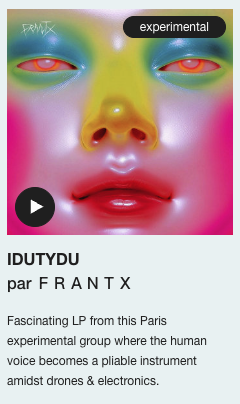
Two releases here show the breadth of the work of Oslo-based Italian musician & singer Andrea Giordano, mentioned above as an early collaborator with Nicolas Remondino in their electro-acoustic duo ŌTONN and the contemporary classical/jazz Dròlo Ensemble. And while I say she is Oslo-based, Giordano is also leader of the Paris-based “glit-noise” band FRANTX. As far as I know, in FRANTX she is lead singer, also playing melodica and all sorts of electronics (in other groups she plays winds and various keyboard-based instruments including accordion). I intrepret “glit” as “glitch”, but it could also refer to glitter, and the group has a glittery queer punk attitude, tackling the politics of making music in the current context, expressing themselves through electro-acoustic experimentalism, punk noise (or noisy punk) and a weird instrumental lineup (guitar & drums added to Giordano’s melodica and Fanny Meteier‘s tuba). The album’s out on May 22, titled IDUTYU (“I Didn’t Understand That You Didn’t Understand”).

Utility Fog teeters on the cusp between acoustic and electronic, organic and digital. Constantly changing and rearranging, this aural cloud of nanotech consumes genres and spits them out in new forms.

Peter Hollo curates each episode around a narrative of genre-plasticity, deep-diving into artist histories, side projects and influences. Challenging sounds are contextualised within musical movements, surprising connections are uncovered, unfairly overlooked works are revisited.

Come on a journey through music in all its ugly beauty.

Full links and extra info can be found at the Utility Fog blog

Get Utility Fog in your inbox every week

Visit Utility Fog on Facebook

Find Peter on Instagram

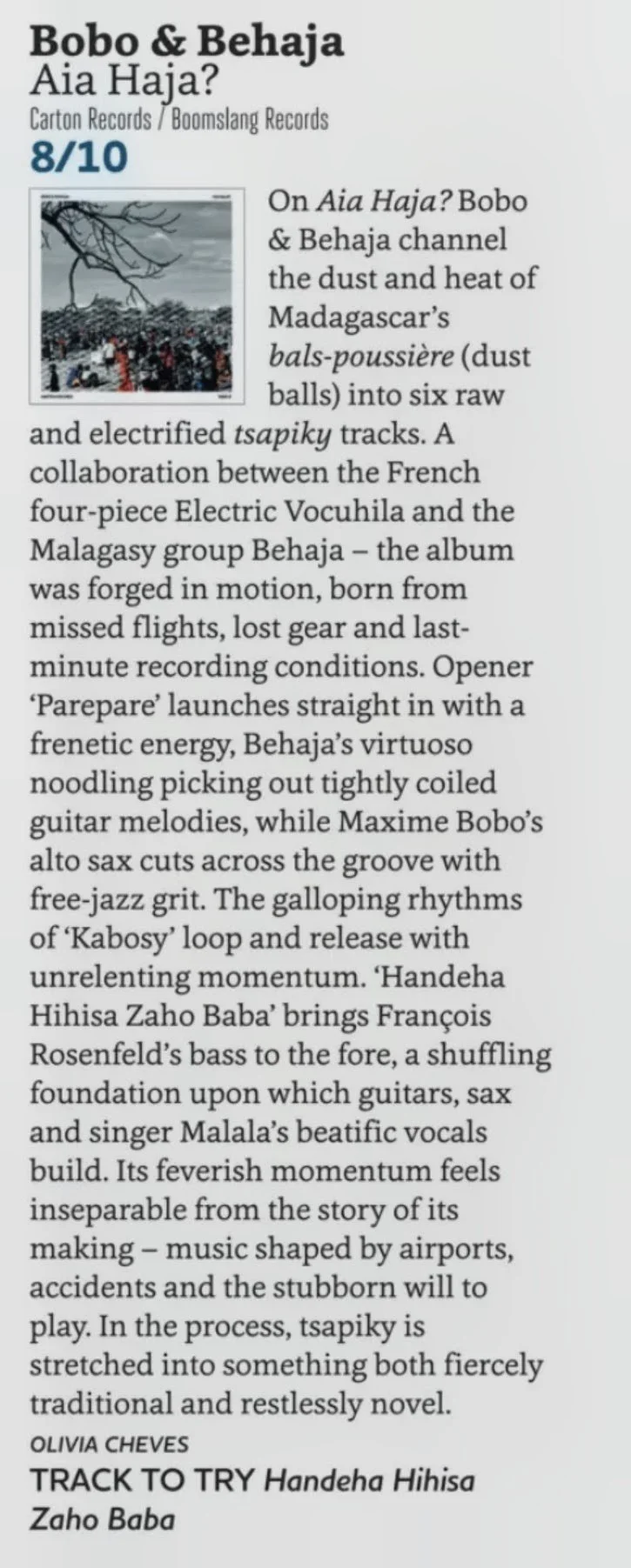
bobo & behaja | aia haja? @ songlines (en)

Bobo & Behaja
Aia Haja?
Carton Records / Boomslang Records
8/10

On Aia Haja? Bobo & Behaja channel the dust and heat of Madagascar’s bals-poussière (dust balls) into six rax and electrified tsapiky tracks. A collaboration between the French four-piece Electric Vocuhila and the Malagasy group Behaja — the album was forged in motion, born from missed flights, lost gear and last-minute recording conditions. Opener ‘parepare’ launches straight in with a frenetic energy, Behaja’s virtuoso noodling picking out tightly coiled guitar melodies, while Maxime Bobo’s alto sax cuts across the groove with free-jazz grit. The galloping rhythms of ‘Kabosy’ loop and release with unrelenting momentum. ‘Handeha Hihisa Zaho Baba’ brings François Rosenfeld’s bass to the fore, a shuffling foundation upon which guitars, sax and singer Malala’s Beatific vocals build. Its feverish momentum feels inseperable from the story of its making — music shaped by airports, accidents and the stubborn will to play. In the process, tsapiky is stretched into something both fiercely traditional and restlessly novel.

OLIVIA CHEVES

tangent mek | immutable traveler @ 15questions (en)

Anouk Genthon of Tangent Mek about Improvisation

When Anouk Genthon speaks about the debut album of trio Tangent Mek, she recounts how improvisation guided composition and how important sound was to their overall vision. But she also mentions conversations, travels, and memories – it's a radical ritual with a gentle induction.

Name: Anouck Genthon
Nationality: French, Switzerland-based
Occupation: Composer, violinist, ethnomusicologist
Current release: As part of her trio Tangent Mek with Anna-Kaisa Meklin (viola da gamba) and Marina Tantanozi (flutes, voice), Anouck Genthon's has a new album out - Immutable Traveler - via Carton. She is also part of the 25-member band Le UN, whose triple-CD release 25 pièces sans vide is out via UNREC.  

If you enjoyed this Anouck Genthon interview and would like to stay up to date with her music, visit her official homepage. She is also on Instagram, and Facebook.

For a deeper dive, read our earlier Anouck Genthon interview about her creative process.


Tell me about your instrument and/or tools, please. What made you seek it out, what makes it “your” instrument, and what are some of the most important aspects of playing it?


As a trio, we tend to think of our “instrument” as the collective sound we create together — something that has evolved and transformed over years of collaboration.

It is not only about the individual instruments we play, but about a shared way of listening, interacting and relating to each other’s sound. Through this process, the three voices gradually merge into one, forming a sonic identity that feels deeply personal to us.

This is what makes it “an instrument” in its own right: a unified sound without hierarchy, where three distinct identities coexist and blend. It has been moulded over time through playing, traveling, experimenting, laughing, and simply growing older together.

As for the essential aspects of playing it, we would highlight space, harmonics, acoustics, friction, and the constant attention to balance and presence within the group.

Derek Bailey defined improvising as the search for material which is endlessly transformable. What kind of materials have turned out to be particularly transformable and stimulating for you?

We believe that this idea of perpetual transformation is a fundamental aspect of the living world, not something that belongs only to music. When you watch a river flowing, for example, it becomes clear that the current is, in many ways, always similar, yet never the same.

If we were to point to a specific material in relation to our playing, we would mention our long-term exploration of harmonics — a material we are particularly drawn to and continue to develop across several pieces. Harmonics quickly became a vivid source of inspiration: a crystalline, almost celestial sound, floating in the air, with something nearly magical in the way it comes into being.

The Viola da gamba offers a particularly rich harmonic spectrum, while the flutes and violin each bring their own distinct qualities and possibilities.

After spending countless hours working on these sounds—searching for them, coaxing them into resonance—it became clear that the further we go in this sonic exploration, the more the field expands and opens up, with new combinations constantly emerging.

Everything is in continuous transformation: under the fingers, but also in response to the space in which this sound material unfolds. Additionally, the weather conditions strongly influence how the sound is transmitted: it is a fragile, unstable material, one that continually brings us back to the acoustic space and the act of listening itself.

Do you feel as though there are at least elements of composition and improvisation which are entirely unique to each? When you're improvising, does it actually feel like you're inventing something on the spot – or are you inventively re-arranging patterns from preparations, practise or previous performances?

In our case, composition and improvisation are closely linked.

After many years of improvising together, we reached a point where we felt the need to move toward composition. In a sense, these compositions were only possible because of the long period of shared improvisation that preceded them. The compositional process itself often involved revisiting and reshaping patterns that had emerged through improvisation.

This is, of course, a particular way of composing collectively, but the music on our recent album could only have come into being through this compositional process. As musicians who both improvise and compose, it is therefore difficult to draw a clear line between the two; however, it is evident that this approach has introduced a new dimension to our work.

What balance is there between forgetting and remembering in your work?

Both play a crucial role in our practice.

Improvisation requires a certain ability to let go, to forget patterns, expectations and habits in order to remain open and present. At the same time, memory is always at work: it informs our listening, our choices, and the subtle re-emergence of materials shaped over time.

It is precisely in the tension between these two states that something new can arise.

Taking your recent projects, releases, and performances as examples, what, would you say, are the key ideas behind your approach to improvisation?

On our recent release, Immutable Traveler, our first album, we approached improvisation as a tool for composition.

We began by improvising without any predefined material or concept, allowing our conversations, travels, memories, and even the light and vastness of the room to flow into the music. From there, we improvised, recorded, listened back and selected the fragments that resonated most with us.

This material then became the basis for further development: we shaped, transformed, distorted, and re-recorded it, continuously modulating and refining it until a final form gradually emerged.

What are some of your favourite collaborators and how do they enrich your improvisations?

We would like to approach this question slightly differently and instead speak about what we hope to develop in the next phase of our work. For us, one of the most important collaborators moving forward is the sound engineer.

Following our recording experience with Benjamin Maumus on Immutable Traveler, we became more aware that our music contains a wide range of subtle details and sonic qualities that can only fully emerge and be heard through careful and refined amplification. This realization opened up a new perspective on how our sound can be shaped and perceived.

As a next step, we would like to build a close collaboration with a sound engineer and further explore this idea of nuanced amplification. Ideally, we would also tour together, allowing us to maintain a consistent and distinctive sound across different venues.

In a live situation, decisions between creatives often work without words. From your experience and current projects, what does this process feel like and how does it work?

We recently had the opportunity to play several concerts in a row while presenting our new album, and this experience revealed something essential about our way of working. Over the course of these performances, the pieces began to transform in ways that are difficult to fully articulate.

It is a process that unfolds through repetition, listening and shared presence. Without needing to speak, we gradually adjust to one another, allowing subtle shifts to emerge from within the music itself. In this sense, decisions are not consciously negotiated, but rather felt and embodied, arising from the collective experience of playing together.

Stewart Copeland said: “Listening is where the cool stuff comes from. And that listening thing, magically, turns all of your chops into gold.” What do you listen for?

Anna: We listen closely to the sound of the space itself: how it responds, resonates, and shapes what we do. We listen to how the audience is listening to us, and to how the music ultimately finds its final form in this shared moment of listening and sounding.

Anouck: For me listening seems to be the raw material of any sonic practice. It is about placing oneself in a listening context in order to finely perceive how things take shape, emerge, and come into being in real time. Listening is a thread that undeniably connects us, continuously, to the living world.

Marina: I experience listening as a space of freedom and possibility, an open field where anything can happen at any moment. I listen for the sound that might trigger a clear shift, for a harmonic that suggests a new direction, for the turning points: an overflowing silence or a sudden gesture that redirects the course of the music.

Listening becomes a way of navigating these transformations in real time, of recognizing when a situation calls for continuity, rupture, or redirection within the unfolding form.

As listeners, do you also have a preference for improvised music? If so, what is it about this music that you appreciate as part of the audience?

Yes, we attend as many concerts as possible. When listening to improvised music, what we particularly appreciate is the ability to perceive how musicians listen to one another—their quality of listening as expressed through the way they play, interact, and respond to what is unfolding in the moment.

The personal musical languages that emerge through long-term collaborations, the plasticity of sound: the sense of constant transformation and the opening of new possibilities. The different ways and strategies musicians use to direct the energy of a performance over time and to guide a set.

In a way, we improvise all the time. In which way is your creative work feeding back and possibly supporting other areas of your life?

The choice to work as musicians already affects our daily lives considerably, as the structure of the profession differs from that of a more conventional job. It brings with it both a sense of freedom and responsibility.

We are regularly faced with unexpected situations and have the opportunity to meet and interact with many different people, which is a very valuable experience in today's society.

société étrange | heat @ gonzaï (fr)

Société Etrange souffle un vent de chaleur sur le monde normal

Alors que prolifèrent les générations de contenus et de mots automatisés, il n’a certainement jamais été aussi anormal de composer des musiques instrumentales racontant le monde sans rien dire. C’est là que les Lyonnais de Société Etrange entrent en action avec un troisième album fondamental : Heat.

Depuis déjà plus de dix ans, le trio discret derrière Société Etrange réussit cette exploit de se frayer un chemin sinueux dans la musique dite instrumentale en possédant ce double atout rare de ressembler à un gang de serial killers lorrains extirpés d’un épisode de Faites Entrer l’Accusé, mais aussi d’être capable d’en écrire le générique. Un EP, deux albums et le tube de l’été 2022 que personne n’a entendu (La rue principale de Grandrif) : une ligne droite se dessine, voire un début de discographie solide confirmée avec ce troisième album Heat qui n’a a priori rien à voir ni avec le film de Michael Mann, ni avec la crème auto-bronzante. Encore que : en prenant le disque par la fin avec la plus belle réussite du disque (Fitfh et ses 8 minutes de nappes électroniques à la Principles of Geometry), le groupe le plus taiseux du circuit offre une fin alternative à la scène de duel entre Robert De Niro et Al Pacino sur le tarmac de l’aéroport, et se place sans difficultés dans l’interstice entre Brian Eno, Moby, Passengers (le projet secret de U2) et le Kronos Quartet ; pour ne citer que quelques uns des artistes présents sur la bande originale dudit film.

Do heat yourself

Soutenu et co-financé par la Région Auvergne Rhône Alpes, peut-être tenue d’une main de fer par un fan de Tangerine Dream ou de France, Heat ne réchauffe pas vraiment l’auditeur ; et l’inverse n’est pas plus vrai. Pendant ces belles 43 minutes, c’est un temps ralenti et étiré comme Elastic Man qui se joue ; une espèce d’outre-dub introspectif dont on est à peu près sûr que contrairement aux disques de Pierpoljak, il traversera les décennies sans rien perdre de sa force.
Au grand remplacement, le vrai, celui des musiciens par des robots algorythmés, Société Etrange oppose donc un réchauffement mélodique où le minimalisme élégant justifie toutes les notes jouées ; toutes les intentions, toutes ses références cachées. C’est d’une telle beauté primaire que dans un monde où une Brigitte Macron peut devenir DJ, où Gims se retrouver impliqué dans un trafic international à plusieurs millions d’euros et où Justin Bieber se faire payer 10 millions de dollars pour diffuser des vidéos YouTube à Coachella, la société qui dérape jusqu’à devenir malade n’est pas forcément celle que l’on croit.

Au rythme où vont les choses dans ce groupe de kraut-mou, Société Etrange devrait aborder les années 2030 avec optimisme : tout se sera pété la gueule mais eux disposeront d’une série de disques notables sur l’étagère, dont ce Heat, parfait pour cajoler l’âme au moment du grand hiver nucléaire.

Société Etrange // HEAT // co-production Bongo Joe, Carton Records & Standard In-Fi
https://societeetrange.bandcamp.com/album/heat

tangent mek | immutable traveler @ music map (it)

“Immutable Traveler”, uscito per Carton Records, è il nuovo album delle Tangent Mek, trio formato dalla violinista Anouck Genthon, dalla violista Anna-Kaisa Meklin e dalla flautista e vocalist Marina Tantanozi.

Registrato nel novembre del 2023 nell’abbazia benedettina di Soréze, in Francia, il lavoro è profondamente influenzato da quei luoghi e da quella spazialità e nasce da una purissima improvvisazione, senza materiali né concetti in mente.

Le tre protagoniste hanno raccontato di aver lasciato fluire in musica la vastità e le luci dell’abbazia, al pari di dialoghi, viaggi ed esperienze personali.

Alla luce di tutto ciò, “Immutable Traveler” sfugge a qualsivoglia classificazione in termini di genere, alla forma canzone e agli sviluppi tematici più canonici, trasformando i riverberi e le risonanze della Blue Room e della White Room, di fatto, veri e propri elementi di composizione.

I pezzi non hanno un inizio e una fine, al contrario insistono volutamente su questo senso di incompiutezza fino a renderlo la ragione principale dell’opera.

“Immutable Traveler” può risultare difficile per la sua materia, sospesa tra pulsioni e tensioni drone, noise e folk, ma senza mai correre davvero su questi binari, e per il suo linguaggio non accessibile a tutti, ma resta un disco rigoroso e coerente.

Per un'esperienza realmente autentica, è necessario un ascolto lento e attivo. (Piergiuseppe Lippolis)